
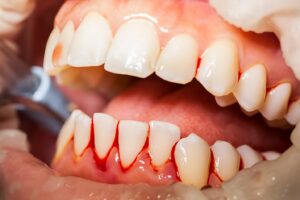
Despite being one of the leading causes of keeping patients in the dentist’s chair, much is misunderstood regarding gum disease, such as its causes, symptoms, and treatment options. In this article, we’ll work on getting the facts straight to help you protect your gums, preserve your teeth, and maintain a healthier smile!
Myth #1: Bleeding Gums Are Normal
If your gums bleed when you brush or floss, you might think you’re just brushing too hard. However, bleeding gums are often an early warning sign of gingivitis, the mildest form of gum disease. Gingivitis develops when plaque accumulates along the gumline, causing inflammation.
Healthy gums generally should not bleed during routine brushing and flossing. Use a soft-bristled toothbrush and gentle technique, but do not ignore persistent bleeding. Your dentist can identify the cause and recommend appropriate treatment.
Myth #2: Gum Disease Only Affects Older Adults
Although the risk of gum disease can increase with age, it is not exclusively an older person’s problem. Teenagers and younger adults can develop gingivitis, while some may progress to periodontitis, a more advanced form of gum disease.
Poor oral hygiene, smoking, certain medications, hormonal changes, and conditions such as diabetes can increase the risk. Maintaining consistent oral care and attending regular dental checkups are important at every age.
Myth #3: If I Had Gum Disease, I’d Know It!
On the contrary, gum disease doesn’t always cause noticeable discomfort, especially in its early stages. You may have inflammation without experiencing pain, which makes it easy to overlook.
Possible warning signs include red or swollen gums, constant bad breath, gum recession, and bleeding when brushing. As the condition advances, teeth may become loose or chewing may become uncomfortable.
Routine dental examinations allow your dentist to identify problems you might not notice at home. Early detection can help prevent more extensive damage.
Myth #4: Brushing Alone Prevents Gum Disease
Brushing twice daily is essential, but it doesn’t get rid of all the plaque that accumulates between teeth. Without daily interdental cleaning, plaque can remain in hard-to-reach areas and contribute to gum inflammation.
Floss once a day or use another dentist-recommended interdental cleaner. Professional dental cleanings are also important because hardened plaque, known as tartar, cannot be removed with regular brushing alone.
Myth #5: Gum Disease Always Leads to Tooth Loss
Gum disease can damage the tissues and bone supporting your teeth, potentially causing tooth loss when left untreated. However, tooth loss is not inevitable.
Gingivitis can often be effectively managed with improved oral hygiene and professional cleaning. Periodontitis generally cannot be fully reversed, but treatment can control the infection and help prevent further damage.
Do not let common myths jeopardize your oral health! Brush, floss, maintain regular dental visits, and seek professional advice if you notice changes in your gums. Early treatment is one of the best ways to protect your smile from the lasting effects of gum disease.
About the Author
To Dr. Anh Vo, dentistry isn’t just a profession; it’s his calling, combining his love of science and structure with a heart for helping people. His formal education ended with earning his degree from the Texas A&M College of Dentistry, but his commitment to lifelong learning continues. Every year, Dr. Vo completes over 150 hours of continuing education courses, ranging in topics from dental implants and oral surgery to cosmetic dentistry. Furthermore, he is on track to earn the notable distinction of Fellowship status with the Academy of General Dentistry. To see how Dr. Vo can help you in the fight against gum disease, visit our website or call our Grand Prairie office at (469) 890-1199.