
TMJ Treatment – Grand Prairie
Give Your Jaw a Break!

Have you noticed frequent popping, clicking, or pain when you chew your food or open your mouth to speak? Do you have frequent morning headaches and earaches? This could be due to temporomandibular joint (TMJ) disorder, also called “TMD.” This is when the jaw joints don’t function properly, leaving you with numerous uncomfortable symptoms. Fortunately, we can help! Continue reading to learn more about TMD and what treatment looks like. To schedule an appointment, give us a call!
Why Choose Radiant Smiles for TMJ Treatment?
- State-of-the-Art Dental Technology
- Relieves Chronic Jaw Pain
- Flexible Financing Available
What Is TMJ Disorder?
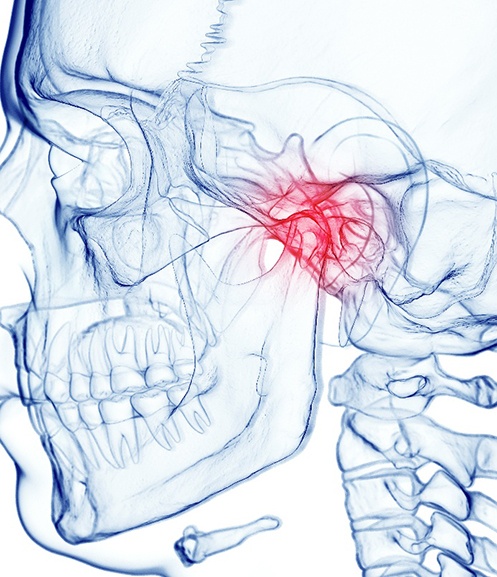
The TMJs are a small set of hinges located in front of your ears. This is the joint that allows your lower jaw to move up and down when you speak, laugh, talk, and eat. The TMJ is one of the most complex joints in the entire body, so it can be disturbed by a misaligned bite, teeth grinding, and other factors. When the TMJ is disturbed, this known as “TMJ disorder.” It can result in all sorts of negative, painful symptoms.
Symptoms of TMJ Disorder
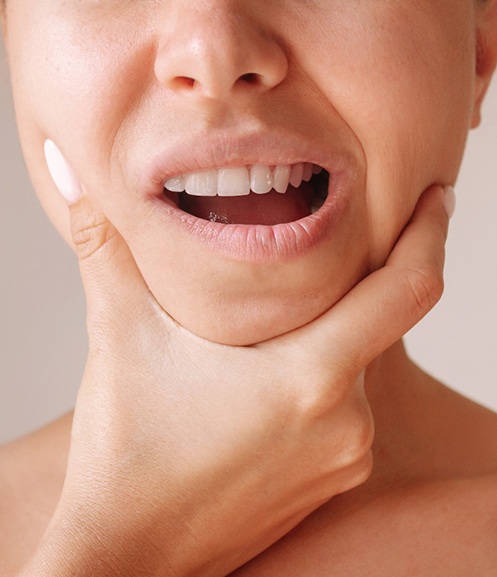
TMJ disorder can present itself in a variety of ways. Here are some of the most prominent ones that are experienced.
- Headaches: One of the most underdiagnosed causes of frequent headaches is TMD. The jaw muscles become tense, strained, and overworked, so it is easy for this to affect nearby muscles in the head.
- Ear Pain: Since the TMJ is located next to the ears, having a dysfunctional joint can easily result in ear pain. It can also cause ringing in the ears, known as tinnitus.
- Face/Jaw Pain: Jaw stiffness and pain are the most common symptoms of TMD. It can be difficult to chew comfortably, and lockjaw is very common.
- Bruxism: Teeth clenching and grinding can be caused by daily stress, a misaligned bite, and TMD. It usually happens during sleep and can overwork the jaw muscles, leading to additional pain.
Equilibration/Occlusal Adjustment

Often times, TMD is the result of bite misalignment or an improperly placed restoration. In this case, we treat it with equilibration/occlusal adjustment. For this treatment, we strategically and gently reshape your teeth so that they come together in a more function way. This helps to relieve tension from the joints. Ultimately, when the teeth come together properly, the jaw muscles relax, causing TMD symptoms to subsite.